x
Making live performances on the Internet has become more prevalent with Web 2.0 and social media, where synthetic worlds, online games and chat rooms have become the stage upon which artists can unfold their works. Post-Internet is defined as a result of the contemporary moment. First, nothing is in a fixed state: i.e., everything is anything else, whether because any object is capable of becoming another type of object or because an object already exists in flux between multiple instantiations. (Vierkant, 2010)
Project: Pam Reborn
→ In 2008 I got an idea to create a venus, in the tradition of Titian, Velasquez, Botticelli and so many other artists. I needed a model, and chose the original internet pin-up, Pamela Anderson, considered at the time to be one of the most imaged women on the web. This began a technical struggle, an attempt to reconstitute Pamela Anderson, her figure, to reclame the living being from hundreds of thousands of images spread over the internet.
Project: Hybrid moment
→ Animations generated by an exploration of colors and geometric forms controlled by coded. Hybrids are digital collages created remixing “found” works of Net Art with random web pages.
Project: Survivel Guide
→ At the moment it is realised as a book, an installation (Formats) and a series of events and exhibitions. This book is a tool to assist in stepping above our daily online routine, to reach a realm that lies somewhere between reading a principal religious text, watching a colonial documentary on savages, or looking at yourself in the mirror.
Project: Search by Image
→ Generated with Google is search by image.
Project: Taken By Injection
→ An open-source programming language and environment for creating images and animation. The abstract patterns and shifting structures contained within his images and animations explore ideas of transformation and evoke systems both organic and synthetic.
Project: Slick quick
→ Animations generated by an exploration of colors and geometric forms controlled by coded.
Project: Exploits
→ A series of work utilizing existing intellectual properties which are licensed or purchased from their current owner. The intellectual properties are taken as a set of negotiated guidelines within which physical works may be produced, and as a set of norms to be deviated from.
Project: Image Objects
→ Works that exist at the interstice between the physical object and the mediated image.
All contexts appropriated form the following sources:
Olson, Marisa (2008), “POSTERINTERNET: art after the internet.”
Lialina, Olia and Espenshied, Dragan (2009), “Digital Folklore.To computer users, with love and respect.” ISBN: 9 783937 982250. Edited by Olia Lialina & Dragan Espenschied.
Lialina, Olia (2010) “VERNACULAR WEB 2.0”.
Vierkant, Artie (2010), “The Image Object Post-Internet.” His work can be seen at artievierkant.com
Hazas, Mike and Christou, Elisavet (2017), “It’s Just the Internet! Appropriation in Postinternet Art.”. ARTECH2017, September 06-08, 2017, Macau, China © 2017 Association for Computing Machinery.
McHugh, Gene (2011), “Post-Internet Link Editions”. LINK Editions, Brescia 2011 www.linkartcenter.eu. Printed and distributed by: Lulu.com (www.lulu.com).
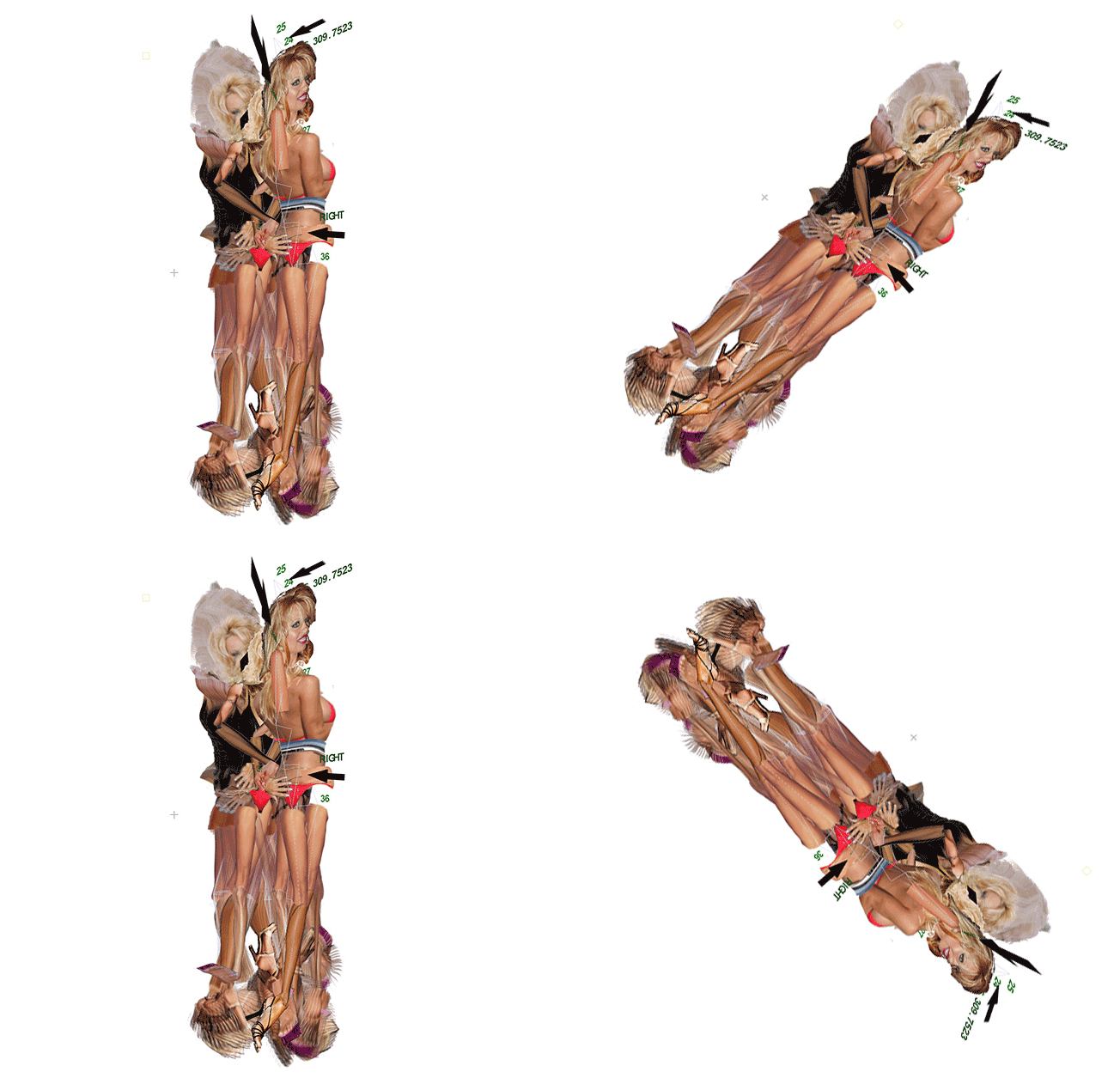
→ Mark Napier, Pam Reborn (2008)
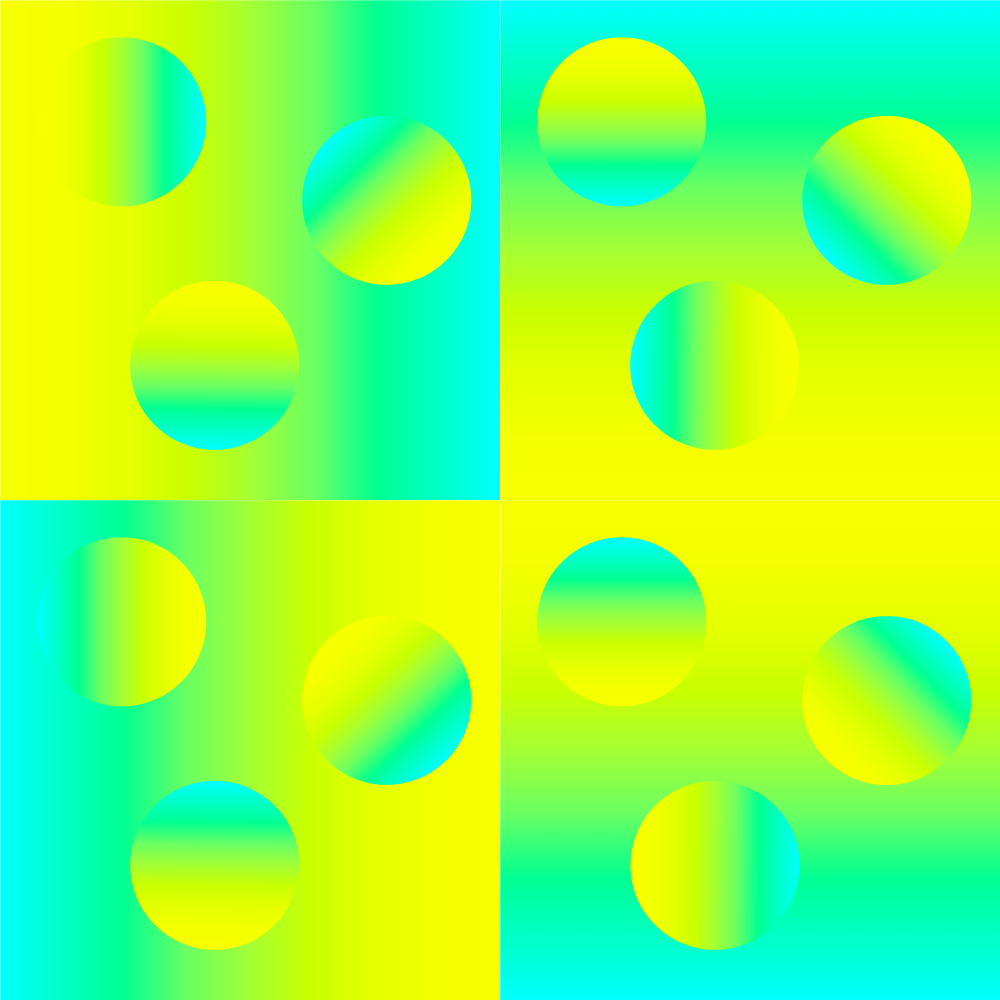
→ Rafael rozendaal, Hybrid moment (2009)
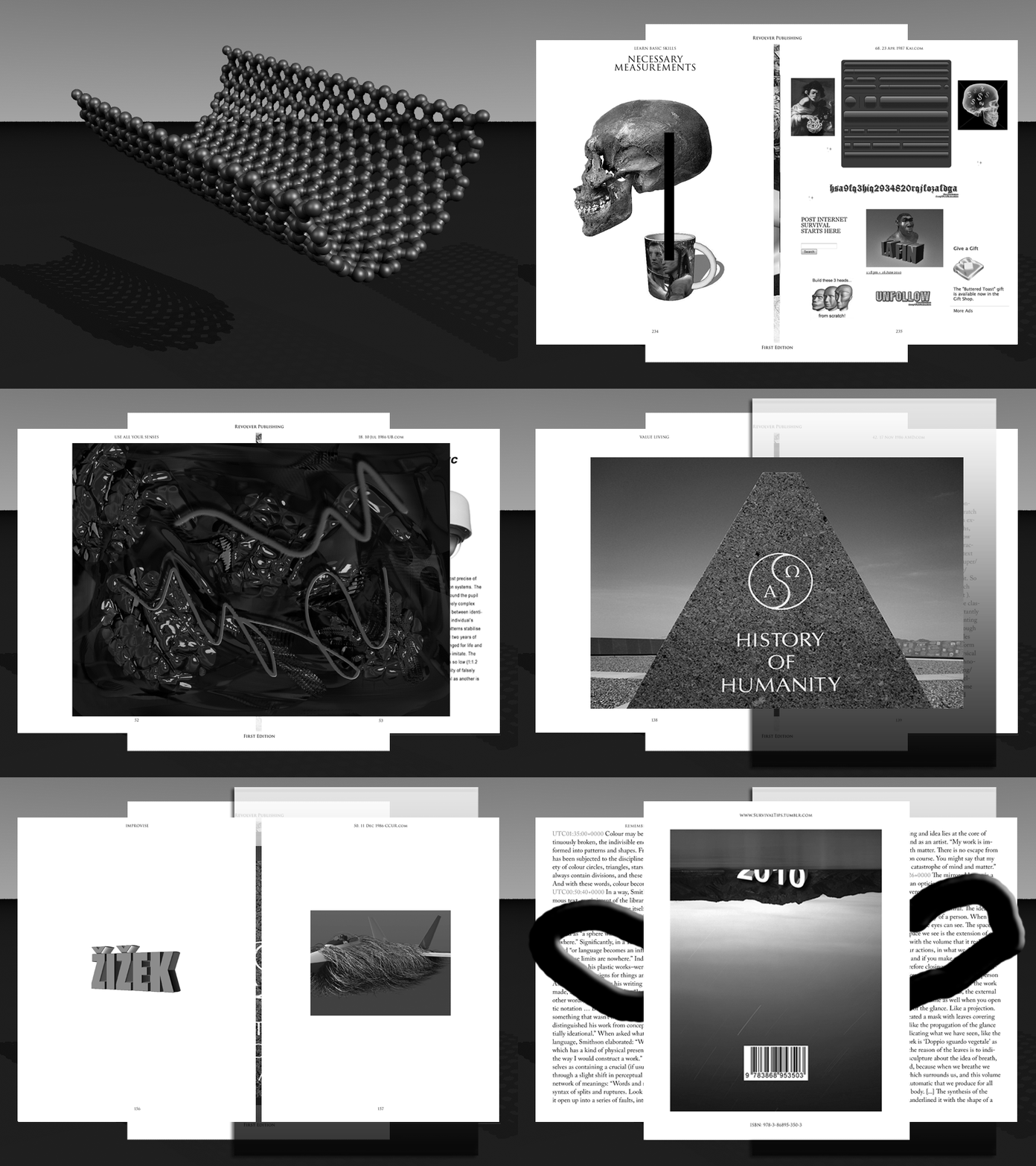
→ Katja Novitskova, Post Internet Survivel Guide (2010)
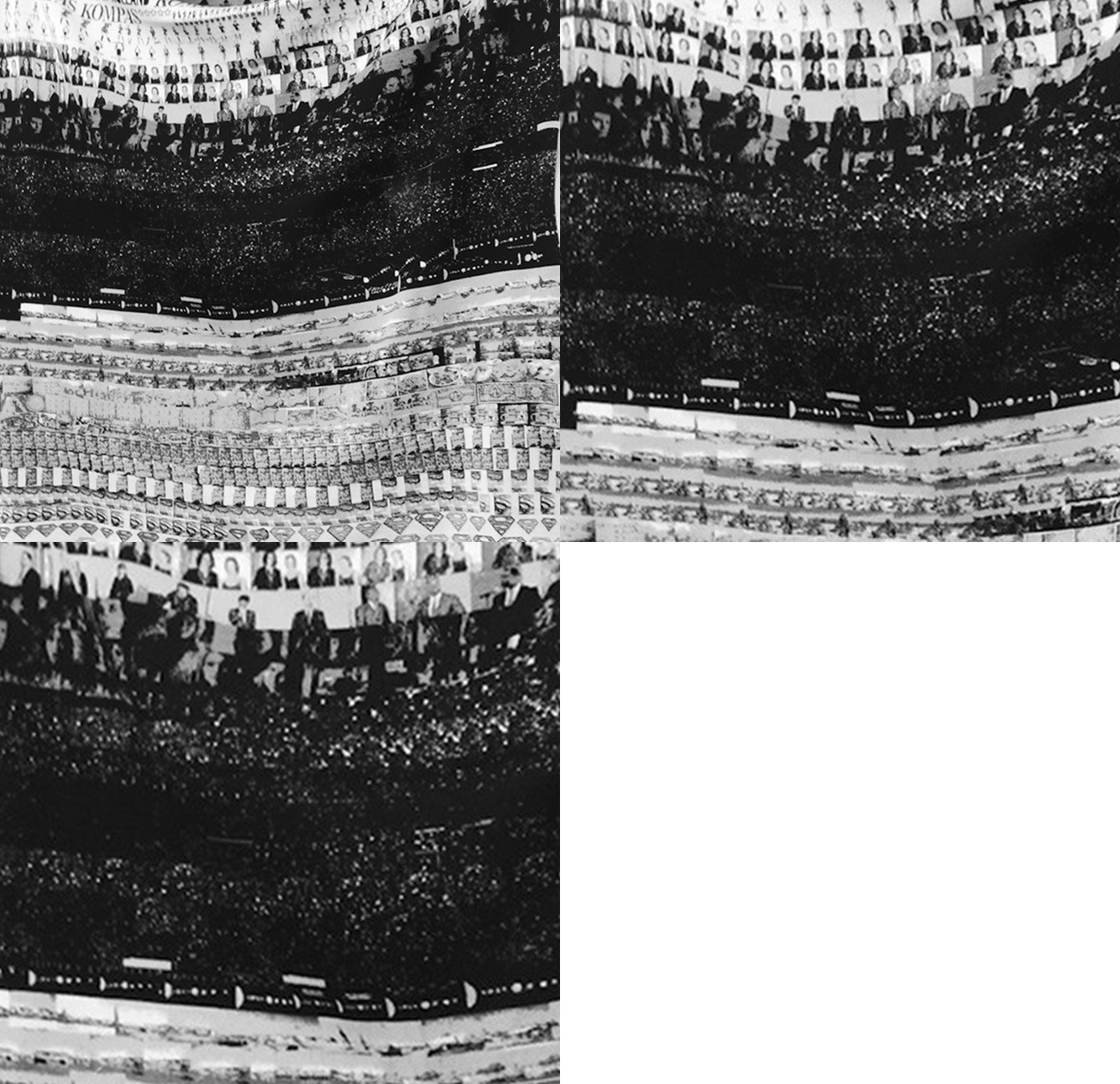
→ Sebastian Schmieg, Search by Image (2013)
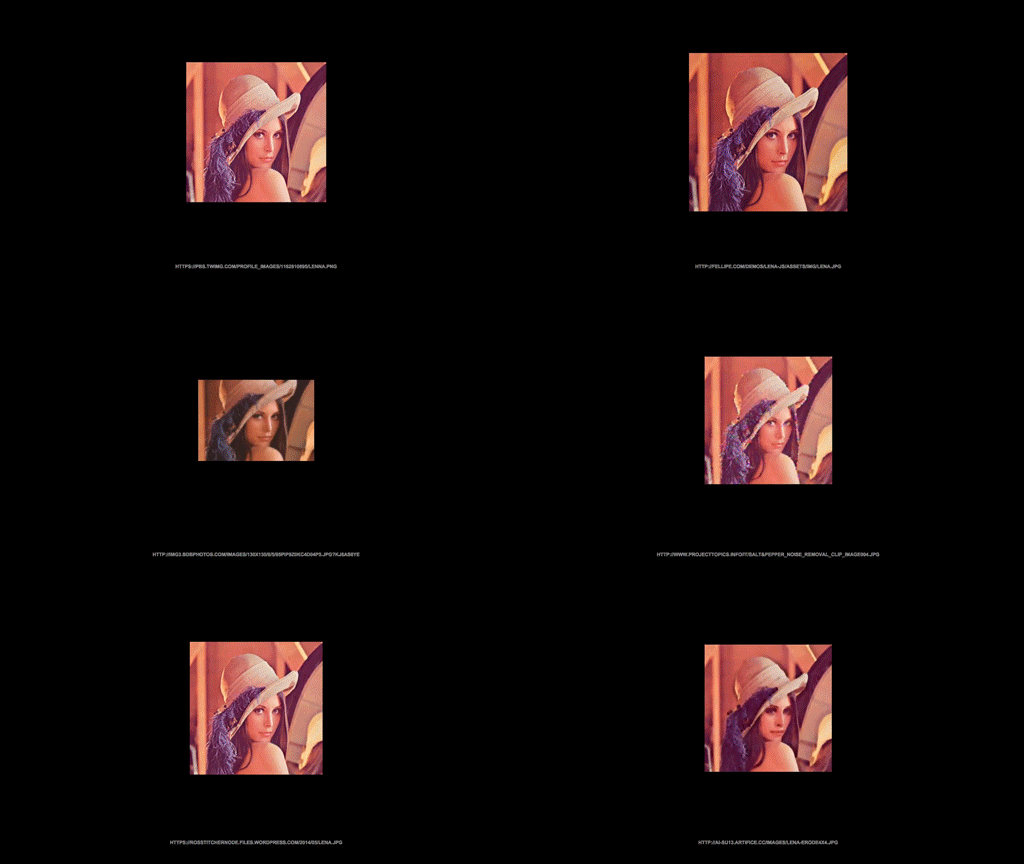
→ Casey Reas, Taken By Injection (2013)
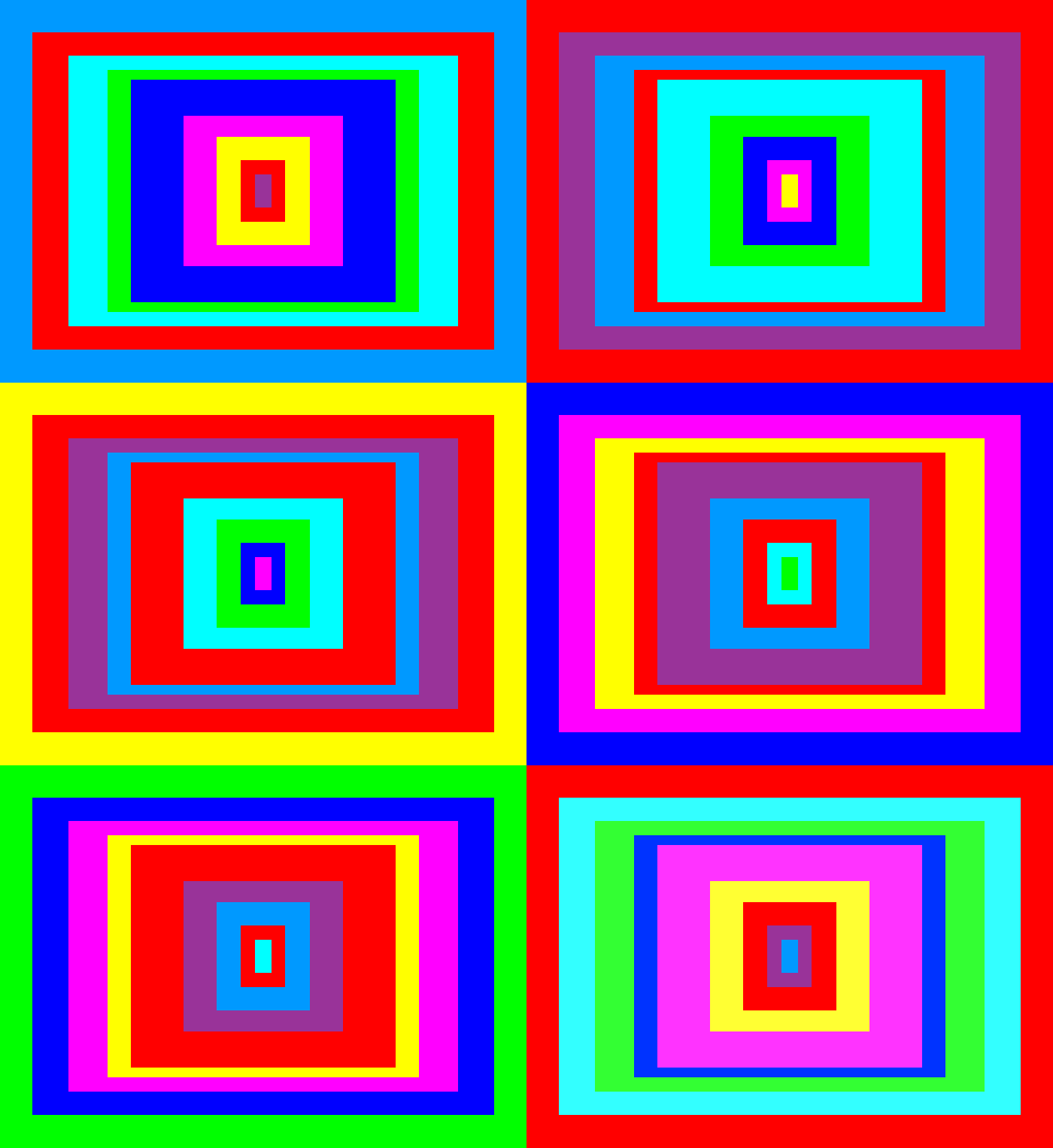
→ Rafael Rozendaal, Slick quick (2014)
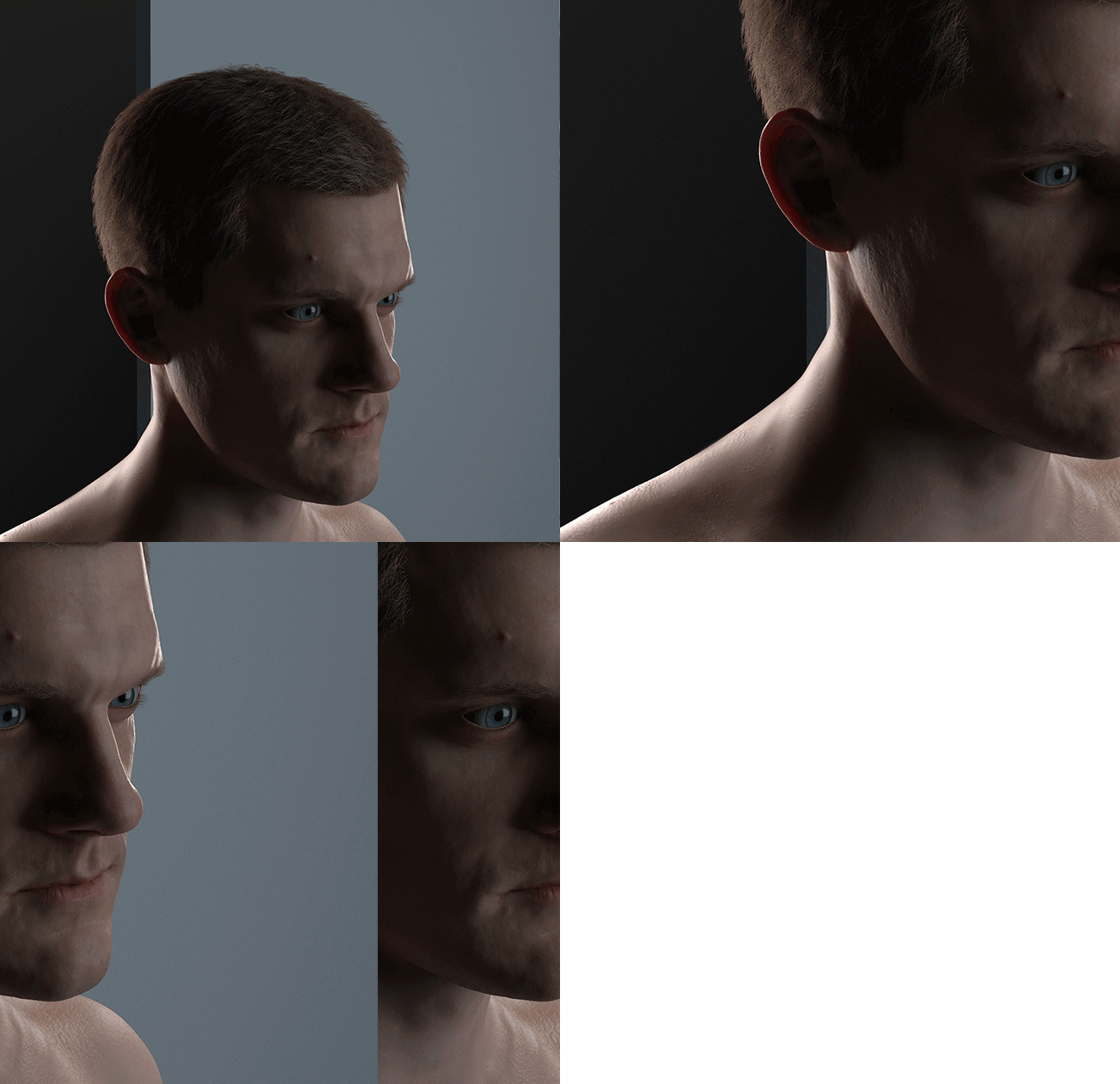
→ Artie Vierkant, Exploits (2014)
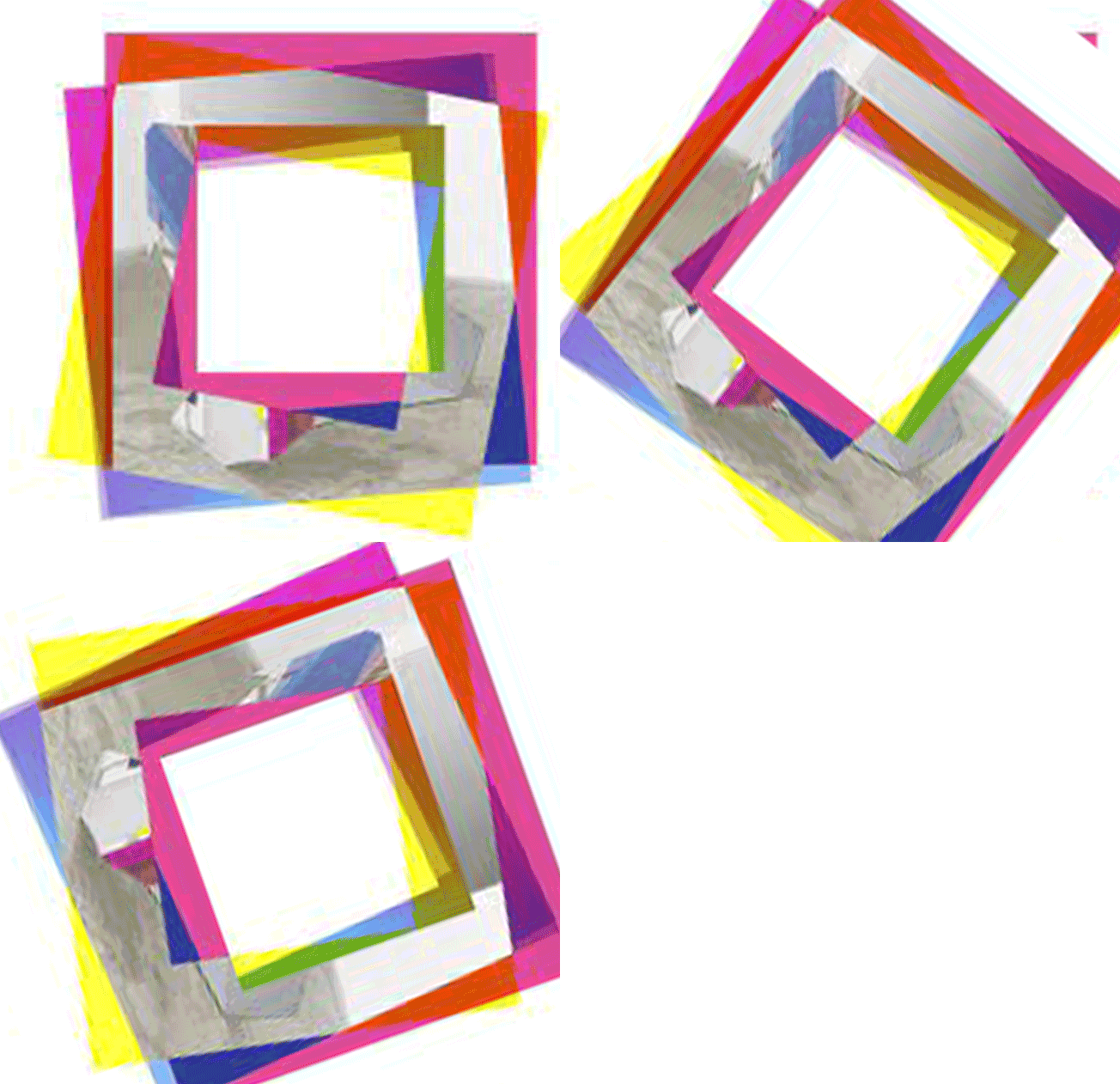
→ Artie Vierkant, Image Objects (2015)